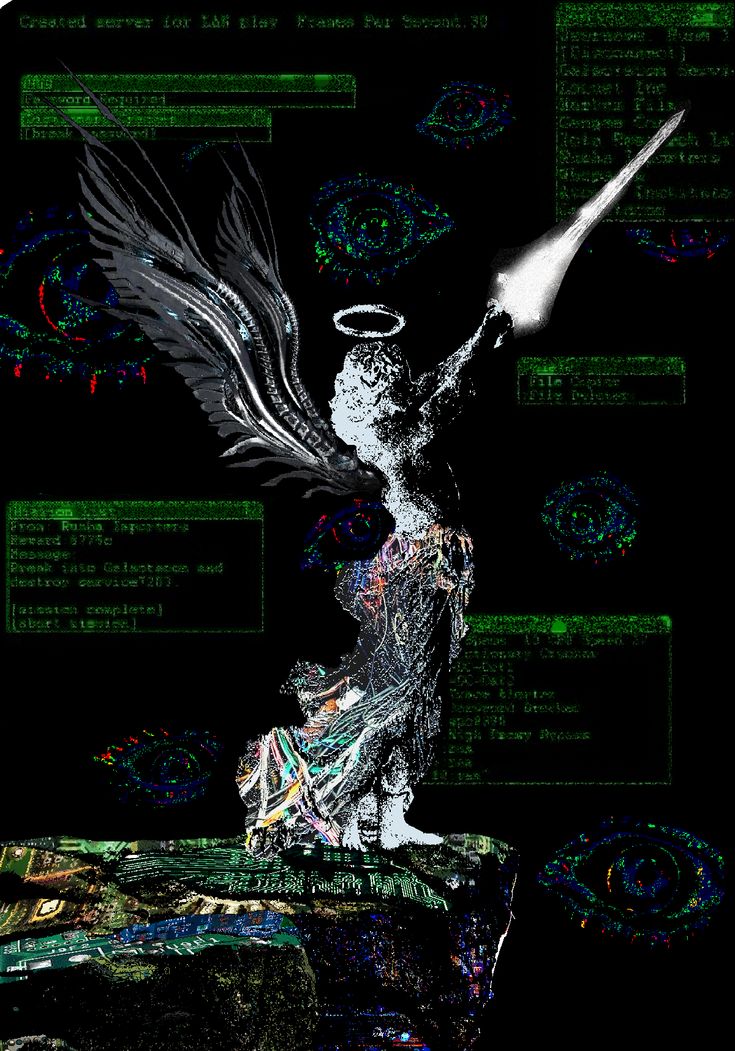
M16 Division is the new religion I started. And nobody else is allowed to join.
A gate can open onto a path, or it can open onto another room belonging to the person who let you in. From the threshold, the difference is difficult to see. Both may demand patience, promise access to knowledge, and give a convincing account of why you were unable to see what was in front of you. The question begins after you enter. Where does the passage lead, and what does it leave you capable of doing?
The Gate and the steep pass
In Kitāb al-Ṣirāṭ, an esoteric Shiʿi work attributed to al-Mufaḍḍal ibn ʿUmar, the dialogue presents guidance as a succession of encounters. In the text, a seeker crosses seven passes, advancing through knowledge, deeds, and striving. At each stage, a person occupying a particular rank makes something available that the seeker could neither hear nor bear at the preceding one. By the seventh pass, the Gate appears and the seeker hears the knowledge of divine unity openly. The working translation describes the result in unusually direct language:
He becomes sovereign over himself and free to choose, for he has attained deliverance and purity.
That sentence comes after a long account of instruction, submission, and trial. The sequence matters. The text imagines a freedom that becomes possible because the seeker has acquired capacities he once had to rely on others to exercise. At §24, he has gained insight and no longer needs someone to show him. The passage gives this transition an inward reading of Qurʾān 90:11–13, where the steep pass is explained through the freeing of a neck. In its Qurʾānic setting, the image is an act of manumission. The Ṣirāṭ takes it up as an image of the seeker’s release from servitude.
The freedom described here belongs to the text’s own cosmology. It entails purity, unveiling, and direct knowledge of the Lord. In the vocabulary of M-16 Division, sovereignty has a practical application. A person who once needed a teacher to make sense of a passage should eventually be able to read it, account for the interpretation, and answer a serious objection. If a teacher’s authority was justified by what the student needed to learn, the student's learning changes the relationship.
The other ascent
The Book of Apparitions & Shadows, or al-Haft, gives the counterfeit its clearest form. Chapter 15 describes the ascent into disbelief as a mirror of the ascent into faith. A person advances by degrees until he becomes a refuge for tyrants, a center toward which they incline. He becomes a gate when he begins prescribing wrongdoing on his own authority and calling others to it. The passage gives corruption a social structure. It can produce ranks, command loyalty, and draw people who see their own conduct justified in the person above them.
Qurʾān 2:257 gives this symmetry a direction. God brings the believers out of darkness into light, while the patrons of disbelief take their followers from light into darkness. Both clauses describe people being led. To tell the movements apart, one has to see where they go.
The Ṣirāṭ picks up the problem from the side of the person who answers. In its reading of Qurʾān 14:22, Iblīs calls and people respond, even though he has supplied them with neither proof nor a sound way (§§48–49). By §50 the call has a dwelling in the soul itself. This makes the counterfeit harder to locate than a fraudulent teacher. A seeker may already want the conclusion he is being offered. A voice that tells him every criticism is envy, or every doubt a sign that others cannot bear his rank, can sound remarkably like his own judgment.
What happens when you no longer need the Gate?
There is a striking reversal later in the Ṣirāṭ. In the text, knowledge entrusted to the teacher is compared to property held on behalf of an orphan. A teacher who withholds understanding leaves the seeker with partial sight and nowhere to turn. The text places the teacher under judgment for that outcome. In the corresponding account of faithful instruction, the teacher can say that he handed over the property entrusted to him, gave the seeker understanding, and made the way clear. The success of the relationship requires something in the teacher’s keeping to pass into the student’s hands.
The Haft makes a narrower point at the end of chapter 14. When two believers reach equality of rank, the authority one exercised over the other on account of the difference ceases. The larger hierarchy remains in view, as it does in the Ṣirāṭ. Both passages nevertheless make room for a relationship whose original terms cannot simply be carried forward after the seeker has changed.
The Ṣirāṭ also asks what becomes of the Path when the Gate is withdrawn. The answer is that what was heard survives in pages and in breasts. Preserved teaching can take the place of direct witnessing during concealment, and those who received it can become a way for others. The responsibilities of guidance therefore extend beyond the first encounter. Section 32 gives one measure of whether someone is ready to bear them. A person who has attained a station should desire that those below him share in what he received.
That is where the two Gates finally become distinguishable. Consider someone who can now explain what they learned, carry it into a situation the teacher never anticipated, and make it available to another person. What does the teacher do when that happens? The teacher in the Ṣirāṭ has reason to welcome it. The property has reached the person it was held for.