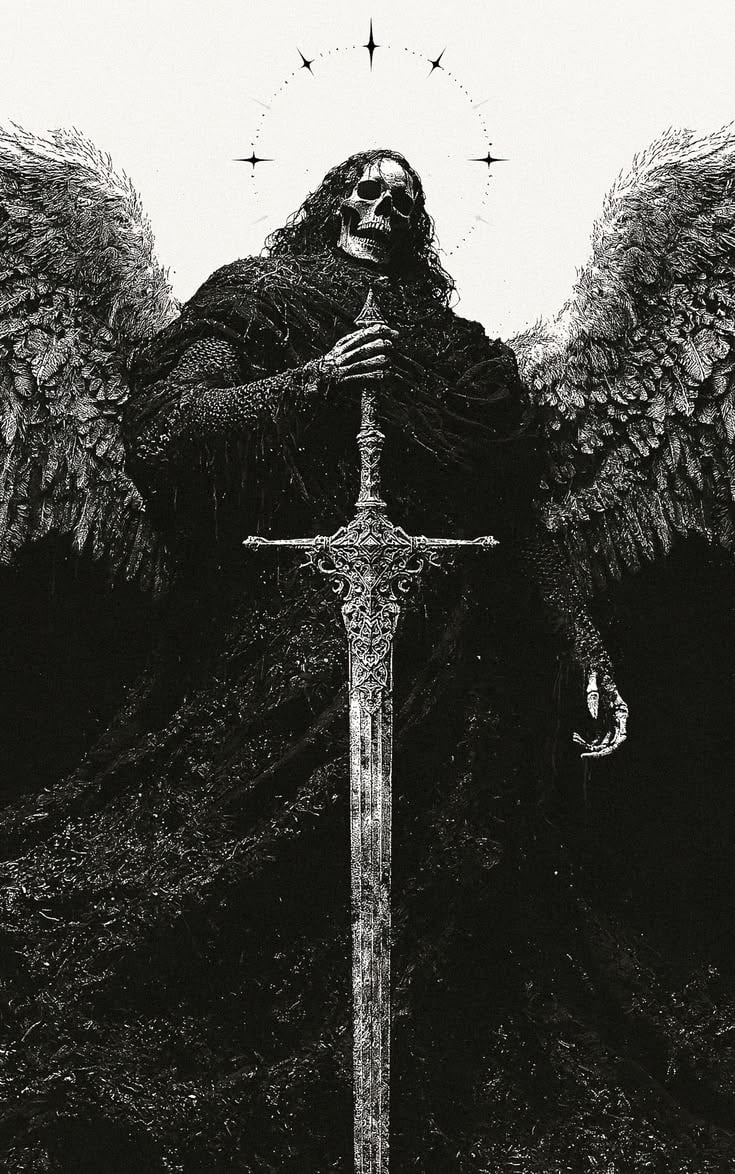
DAMARI · The Apocalypse of Jerusalem
Hook
Whether I live or die, either way—win-win
My dawgie unstoppable, I’m first in
Where you point, I’m shooting, unloading these hits
’Cause I’m a shootah
And all I ever wanted to be was a shootah
Followed whispers in the streets
Till I found the jeweller
See these diamonds on my neck
I been doing good now
Bridge
With no hesitation, like I was born riding
Let me die in glory, you know I’m sliding
When they see me, they gon’ feel this terror
And I ain’t going out till everybody here feel us
Praying for the M’s
I’m praying for the millions
Hands to the sky, just the way you showed us
With no hesitation, like I was born riding
Verse
While I’m here, you gon’ feel me every single day
Got the signal—it might be coming your way
Hearing echoes, even in your head it never fades
Where’s Waldo? Find Noah—they coming with waves
What did you tell yourself when you saw the voids?
Won’t crawl over ice ’cause it hurts your elbows
Does it scrape your knees?
No revolution—guesswork got you squeezed
Just me and my dawgie on the cruise ship
Hella bad bitches on every cruise ship
The jets have landed, mission successful
Hundred-percent regret rate for those who test you
Can’t find himself, he tryna be the next you
But I’m the First and the Last—there ain’t no next me
When you feel this wrath, you gon’ look at me different
That plot in your head made your image go missing
Looking for my dawg, but you can’t even face me
Bring everyone you know—you still can’t replace me
Till that dreaded day where it only gets worse
Everywhere you turn your head, you see it burning
But the world keeps spinning
Yeah the world keeps turning
Bridge
They can’t find him nowhere
Where’s your boy?
Where your boy?
They can’t find him nowhere
Hook and first bridge repeat.
They will search but will not find the man
The loudest person on WIN WIN keeps giving away that there are two men in the song. One says, “I’m first in.” The other never takes the microphone. By the time the bridge asks where he is, the first man has spent a whole verse making himself impossible to ignore. You can see why somebody might mistake him for the person they came to find.
In one of the Jerusalem traditions collected by Nuʿaym ibn Ḥammād, a ruler expels the Yemenites. They disperse into bands in the mountains. A caller names the man to whom allegiance is due, and the people go looking for him.
“They will search but will not find the man.”
— Kitāb al-Fitan, no. 1135, in János Galamb’s South Arabian Messiahs
The call comes three times before they pledge allegiance to the Manṣūr. The thing I would put beside the bridge is what happens before the call. Other groups have already come into the mountains with food and drink. The report compares their aid to Joseph helping his brothers. Another version has the separated Yemenites correspond with one another until they gather “like the small clouds of autumn.” Their ruler has made it difficult for one district to reach another. They have begun to undo that separation before the voice ever names a man.
Amīr al-ʿUṣab
“Disperse the masses and gather the bands.”
— Yemeni royal verse discussed in South Arabian Messiahs
Amīr al-ʿUṣab means Commander of the Bands. Galamb traces the title back to this image of a future Yemeni ruler. He also records forms of the title that mean Master of the Bands. The words describe a relationship to people who were previously apart. And in one succession report, al-Fitan no. 264, the Amīr is listed after figures called the Manṣūr and the Mahdī. There is room in the tradition for more than one figure and more than one function.
Al-Hamdānī gives the song a second correspondence. In the Iklīl, the expected Manṣūr comes out of Dāmiġ or Markabān, between Ṣanʿāʾ and Dhamār. Al-Hamdānī tentatively connects it to the Grey Mountain, a place that had ceased to be inhabited and would flourish again under the Manṣūr. From the mountain comes a humble servant who carries out his will. The account leaves that servant unnamed. When I put him beside the Commander of the Bands, I’m bringing two strands into conversation through the song. The mountain tradition gives me the relation between ruler and servant. The title gives me the relation between a commander and the people he helps gather.
“Got the signal” is how the verse puts it. A signal can tell you where to look. The Jerusalem account asks what you find when you look there. In the mountains, you find people who have started feeding each other.
What mark does the sword have?
“If they are truthful let them say what kind of mark does its hilt have and what is the mark on its blade?”
— Imam Jaʿfar al-Ṣādiq, al-Kāfī, Book of the Ḥujja, ch. 38, report 1
Someone claims to have the Prophet’s sword. Al-Ṣādiq asks what the person claiming it can tell him about the actual object. He goes on to name what has been handed down, including the Prophet’s banner and armour, the staff of Moses, and the ring of Solomon. He describes the armour trailing when worn and says the Qāʾim is the one it will fit. A man can say he has the sword. The report gives you particulars that his claim has to answer to.
The same body of reports compares the Prophet’s armaments to the Ark of the Israelites. The Qurʾān describes the Ark as a sign of Ṭālūt’s kingship. Inside it are “assurance from your Lord and a remnant of what the family of Moses and the family of Aaron had left.” Put that next to “Find Noah—they coming with waves.” Noah’s vessel carries life through the flood. Ṭālūt’s Ark carries a remnant through a change of rule. The Shiʿi report gives the sword that second kind of weight. Its inheritance matters because of what has been preserved and to whom it has passed.
The herald has a mark of his own. In al-Nuʿmānī, al-Bāqir says the Yamānī’s banner guides because “he will invite to the mission of your man.” The report means the Qāʾim. That makes “I’m first in” a more demanding line than it sounds. The first man through the door may be the first one people see. Where does he direct their attention once he has it?
The edge of the sword
“At every period the meaning of Ṣiráṭ is the Manifestation of God and His command.”
— Persian Bayān II.12, working translation via Nicolas.
The Bāb takes up the tradition that the path is “finer than a hair and sharper than the edge of a sword.” He reads its sharpness through the encounter with revealed verses. One person hears and crosses. Another hears and finds himself suspended at the point of decision. The same path that is nearly impossible for one person to cross is wider than Paradise for another. The image gives the sword an edge you can encounter while sitting still, with a text open in front of you.
Then Bayān VI.16 brings the question down to what you do when somebody is about to be harmed. Its working translation puts the obligation plainly: “A person forewarned of another’s intention to use violence is bound to prevent it.” The chapter explains why the practice matters for the next appearance. People must become accustomed to protecting one another so that the person they await can appear among them without suffering at their hands.
That is where I would put the song’s most dangerous boast alongside its best instruction.
Hands to the sky, just the way you showed us.
Earlier, the voice says, “I’m the First and the Last.” The Qurʾān gives those names to God: “He is the First and the Last, and the Outward and the Inward.” The lyric briefly makes the visible man sound irreplaceable. In the bridge, his hands go up in a gesture he learned from somebody else. You can hear both impulses in the same voice. One wants to be the last word. The other remembers who showed him how to pray.
This is where the Amīr al-ʿUṣab becomes visible in WIN WIN. Look at what the bands can do together. Look at what the man with the sword has been entrusted to carry. Look where the call sends you after you’ve heard it.
The song keeps asking, Where’s your boy? The old report lets that question hang in the air. By then somebody has already brought food into the mountains.