
NOTHING AND NOWHERE · REMIX - PART 2
PART 1: WHAT CAN YOU SAY ONCE THE ROOM GOES QUIET?
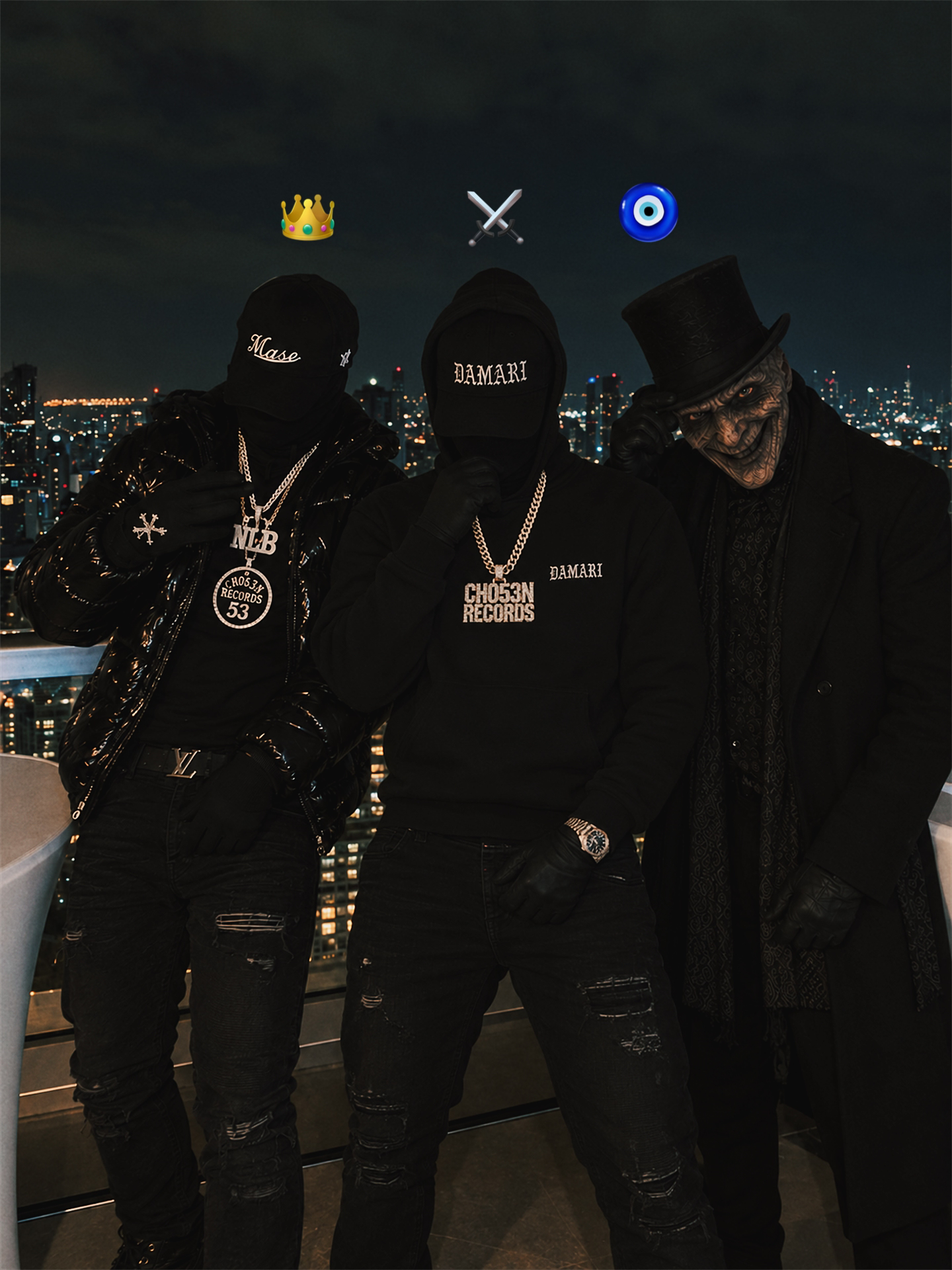
DAMARI × Tuay x Mase_MadeIt
Hook · DAMARI
Hopped up out a flight, I’m from nowhere
Spinning on your block, you cant go there
All these downfalls taught me how to ride momentum
It’s like the room feel it when you pull up and you in it
Perception started glitching, then it all changed (changed)
Im the type to get it while you complain (com-plain)
Go to sleep anywhere, I was trappin rain (yeah, yeah)
Forced myself to wake up every morning still in pain
Verse · Mase_MadeIt
If you see my demons with a smile, they gon shoot
Stepped out the wraith just to shoot you in the face
Whole city full of ghosts, I don’t ever leave a trace
Movin’ silent through the night, yeah, I’m lurking in the haze
All black fit, mask on, no case
Heart cold like the metal that I’m gripping on tight
Shadows in the alley, yeah, they whisper all night
Trust no one, love no one, keep the circle all tight
Every move calculated, every target in sight
Skrrt off in the coupe, black tint, no plates
Gotta keep my secrets locked behind them gates
Every step dangerous, yeah, it’s fate
But I dance with the devil, never hesitate
They don’t see me, they just feel the fear
Pulse racing fast whenever I’m near
Echoes in the dark, I appear
Then I’m gone - disappear
The Grin at the Gate
DAMARI · ʿIlm al-Abwāb
In the original NOTHING AND NOWHERE, I end by saying my smile feels like a tightening noose. Mase begins his verse by putting the smile on the demons. By the time he’s done, the people in the room feel fear and still can’t see him. They have a pulse racing fast enough to tell them something happened. He leaves before they can get a good look at what happened to them.
That’s where Larry belongs in the picture. I’d give him the grin and put him at the threshold. A face can feel familiar before you know what kind of encounter you’re in. You can smile back before you’ve been told what you’re welcome to do. Larry gives us a way to stage that uncertainty. The grin can bring you to the door. The terms of entry still have to be said out loud.
What did you think the smile meant?
In A Little Room, my brother asked whether the person inside could close the door from their own side.
The remix puts a question just before that one. Can they tell what they’re agreeing to while they’re still outside?
The Arabic Bayān gives us a useful distinction in VI.18–19. Permission to look at another person’s papers, the responsibility to deliver a letter, and the recipient’s answer are treated separately. You can have a place in one act without being given a place in the next. In TOO FAMILIAR, I put that in a line I could have used here: “I gave you pieces of me / You mistook them for permission.” If I gave you a page to read, you can ask whether it’s yours to pass on. If I welcomed you once, I can still tell you what part of the house is private. The clearest thing I can do is tell you while there’s still time for you to decide whether you want to be there.
What somebody does after that conversation tells me more than the first misunderstanding. If they respect the limit once they understand it, I have learned something about them. If they agree to keep a page private and circulate it anyway, I have grounds to stop giving them pages. That’s what I would let the Guardian’s mark mean. What happened has changed what I can entrust to you.
What the Guardian can know
“Trust no one, love no one” comes right before “Every move calculated, every target in sight.” I hear somebody who has learned to see a great deal under pressure. I also hear the cost of starting from a conclusion about everybody who comes into view. If you have already decided what a person is, it gets harder to see the thing they might do that would change your mind.
Qurʾān 4:94 puts that problem where getting it wrong can cost a life. In a setting of armed conflict, it tells believers to verify and forbids them to tell someone who offers them peace that they are no believer. It also asks them to remember what they once were. The pressure of the encounter makes verification more consequential. A person can approach from a direction you’ve learned to fear and still be offering you peace.
That gives the Guardian a harder task than catching somebody out. Can he name what he saw, say what he inferred, and give the person’s next action a chance to change his reading? He can keep the door closed while he decides. He can also speak plainly about the decision. I can’t share this with you after what happened last time gives the other person something they can understand and, if needed, correct. Saying I know what’s in you asks them to answer for something the Guardian can’t inspect.
Arabic Bayān X.6 asks people who dispute to exchange their arguments and proofs in writing, with courtesy. In X.16, amid the Bāb’s instructions for responding to the awaited Manifestation, the injunction against torment returns even where assent has yet to be given. That gives me something to do after I’ve closed the door. If there’s a public claim to correct, correct it. If the matter can end there, let it end. The person’s departure can stay a departure.
Whose fear is he reading?
In the original track, Tuay feels the vibe before he sees the snow. Then he gives you the white leather, tells you he’s sitting in it, and says he lives like he wrote the scene himself. The sensation has somewhere to go. In Mase’s verse, people feel the fear and he disappears. They’re left with the sensation and whatever story they can make from it.
That ending puts the Guardian inside the inquiry. If I make a person nervous at the door, I have to account for my part before I decide their nerves tell me something about them. Maybe they had a reason to hesitate. Maybe I gave them one. In Arabic Bayān III.16, people are asked to make their acts mirrors. Applied here, the Guardian should be able to look at the way he received somebody and recognize his own contribution to the scene. Was the invitation intelligible? Could they ask what was expected of them? What happened when they wanted to leave?
Mase says they feel the fear whenever he’s near. In my hook, I say the room feels it when you pull up. I also say I had to force myself awake every morning in pain. Those mornings matter because they give the vigilance a history. If I bring it to the door, it may help me notice something I once would have missed. It may also make me expect the next person to repeat what somebody else did.
Put Larry at the door and let him grin. Let the person outside ask what the grin means. And if the Guardian decides to turn them away, ask him one question while he can still answer it.
What did they do once they knew the terms, and how much of what you saw was fear you brought into the room?