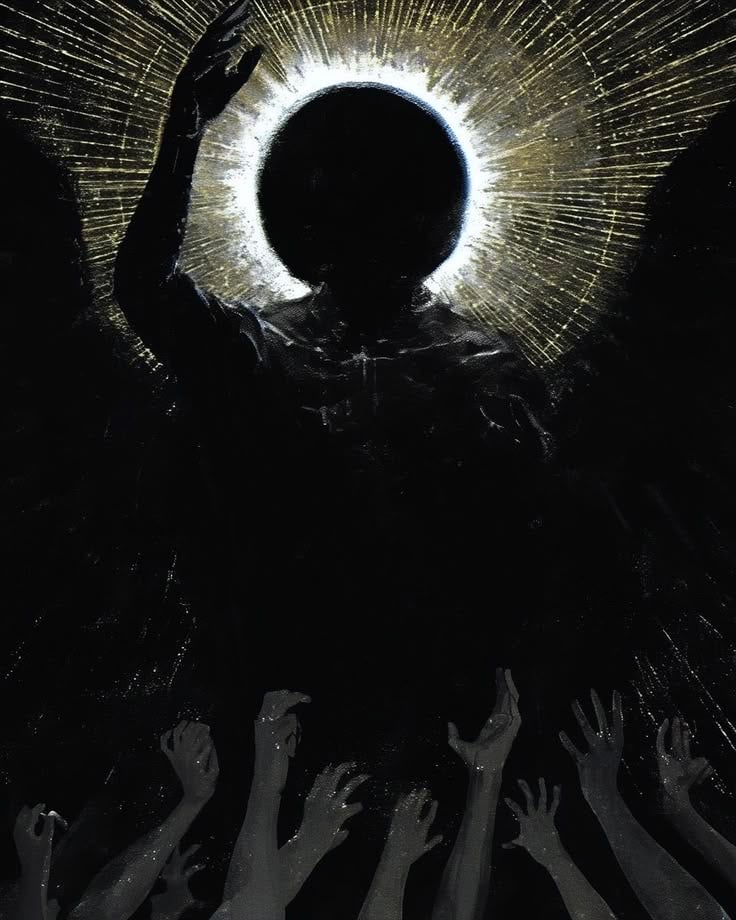

BLINK BY @33DAMARI - PART 3
- BLINK PART 1: WHO IS MISSING FROM THE HOUSE?
- BLINK PART 2: WHEN YOU OPEN YOUR EYES
- BLINK PART 3: WHAT THE OTHER EYE SEES
BLINK - @Mase_MadeIt’s ENTRANCE
VERSE:
Backseat of the Wraith, stars above ignite
Ops be lurkin’, but my vision got sight
Drippin’ in Dior, outfit worth a flight
Shawty know the danger, loves the risk at night
she grabbing on my stick, dont wanna waste time
doesnt wanna wait, hates a wait to ride
says she fell in love cuz i hit it right
She whisper in my ear, “Baby, change my life”
The last thing I hear before my hook returns is somebody whispering my name. By the time Mase enters, the night is moving again. There are stars overhead, danger outside, and somebody beside him who wants to be there. His verse ends with a whisper too. This time the whisper asks something of the man who hears it.
That is the argument his entrance makes. My verse ends with what another person’s sight makes possible for me. His verse ends with what another person expects his sight and power to make possible for her. Between those two moments the song turns from the relief of being reached to the burden of being asked.
The stars inside the car
“Backseat of the Wraith, stars above ignite.” The image works because the stars can be read as part of the car’s interior. A night sky has been brought within reach. The next line restores everything the ceiling leaves out. The sky inside is brilliant, and there is still a street outside that has to be read.
The Light Verse gives us a precise correspondence. Qurʾān 24:35 places a lamp in a niche and describes its glass as resembling a brilliant star. The next verses place remembrance in houses and speak of people whose trade does not distract them from prayer and giving. The arrangement matters. The star-like brilliance is held in something made to contain and transmit light, and the passage goes on to ask what people do where that light is remembered. Mase puts stars inside a moving room and immediately puts sight to work. What does the man beneath that ceiling see that a person looking in would miss?
Then he says, “Ops be lurkin’, but my vision got sight.” The redundancy is exact. He already has vision, and now it has sight. Vision can be the picture he has of where he is going. Sight is what lets him see the conditions he is actually moving through. The first bar gives him the world he has made it into. The second makes him reckon with whose world it still is outside the glass.
What sharpened sight has to distinguish
In the Bāb’s Chapter of the Bees, the people carry the shirt to the Proof. The Imam looks through their eyes, and their sight concerning the Gate sharpens. That final qualification matters. The passage gives sharpened sight an object. The people can see something in particular more clearly than they could before. In BLINK, Mase’s first object is danger. The woman’s entrance supplies a second object, harder to read because she is close and because she wants something. The verse gives us his account of what she likes, then lets us hear what she asks for. Those last words are the most direct evidence the track gives us of what she wants beyond the ride.
This is where Joseph’s shirts offer a better test than taking every impression at face value. His brothers bring blood on a shirt and offer an account of what happened. Elsewhere, the direction of a tear helps expose a false accusation. Finally a shirt reaches Jacob and restores his sight. What counts as evidence depends on what the person looking is trying to determine. A person can read danger correctly and still misread desire. He can be right about why somebody got in the car and know very little about why she asks to stay in his life.
The same distinction applies to her sight. She sees enough danger to be drawn to it. The verse makes that attraction explicit. Then she places a larger hope in the person whose danger she already knows how to desire. How much of him has she seen by then? And how much of her request does he hear through the account he’s already given us of why she is there? The two people are close enough to whisper. The song leaves open how well either one can see the other.
The second whisper
The two whispers make different claims on the men who hear them. In my verse, somebody says my name. The words recognize a person before asking anything of him. In Mase’s verse, she says, “Baby, change my life.” Recognition may be part of that address, but the verb places the work in his hands. It may be seduction, a plea, a dare, or some mixture of all three. Mase gives her the last words. We hear the request and are left to consider what an answer would cost.
This is where the report from al-Ṣādiq in al-Kāfī becomes especially useful. The believer is described as another believer’s eye and guide, and the report sets that relation among duties of loyalty and truthful counsel. To help somebody see is already a considerable form of service. A person who wants you to change their life may need something you can genuinely give. They may also be giving you authority in a moment of closeness that neither of you has thought through. If you can hear both possibilities, you can begin to answer the person who asked.
The House returns here for me. Verse 39 of the Chapter of the Bees names the House, and verse 42 calls the people to come with their own. The song gives us two people sharing a beautiful interior, close enough for one to put a question about her future in the other’s ear. You can spend a night inside a room like that. You find out whether it can become a house when somebody asks what you are prepared to give, what you expect in return, and whether either person can speak plainly once the ride is over.
I ended my verse at the moment I began to rise. Mase ends his at the moment somebody asks him to do something with the life he has made. I wanted to hear my name. She wants to know what her life could become. The track goes quiet before he answers, and for once the silence gives us enough time to hear the whole question.